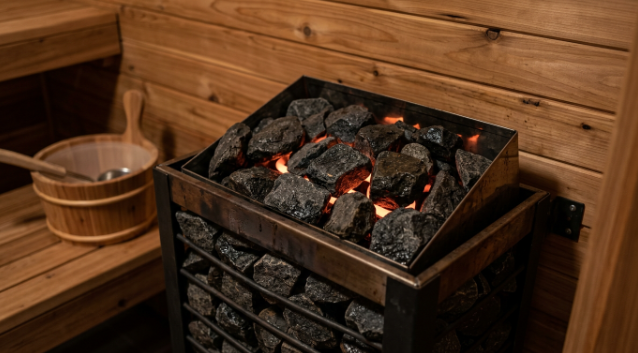
Winter is the strongest window for buying a sauna heater on a budget because retail demand drops after the holidays and before the spring outdoor-living rush, which is when many sellers discount heaters and cabin packages to move inventory. It is also the season when a heater gets used the most, so a winter purchase means getting value from the unit immediately rather than waiting through a warm-weather lull. Getting the kilowatt sizing and clearances right matters just as much on a budget unit as on an expensive one.
Why Does Retail Pricing Dip in Winter?
Backyard leisure categories, including sauna heaters and prefab cabins, generally see a sales spike heading into the holidays and another one in spring as people plan outdoor projects for the warmer months. The stretch in between, roughly January through late February, is a slower period for many retailers, and slower periods are when discounting and clearance pricing on existing inventory tend to show up. A shopper willing to buy in this window, rather than waiting for a specific outdoor-living sale event in spring, often finds the better price simply because demand is lower.
Why Does Buying in Winter Make Practical Sense Too?
A sauna is arguably most valuable in cold weather, when the contrast between the heat inside and the cold outside is sharpest and when other forms of outdoor recreation are limited. Buying a heater in winter means getting immediate use out of it through the coldest, highest-value stretch of the year rather than installing it in spring and having it sit through a summer when it may see less frequent use. For anyone on a tight budget prioritizing value per session, a winter purchase front-loads the payoff instead of delaying it.
How Should a Budget Heater Actually Be Sized?
Heater sizing runs on cubic footage, not square footage: multiply the room’s length, width, and height to get the volume that actually needs heating. Most manufacturer charts use a baseline of roughly 1 kilowatt of heater output per 40 to 45 cubic feet in a well-insulated room, with extra capacity added for glass doors, uninsulated walls, or solid log construction that sheds heat faster. A budget heater in the 4.5 to 6 kilowatt class typically covers a small two-person room in the 150 to 200 cubic foot range once those adjustments are applied, and undersizing to save money upfront usually shows up later as stretched-out warm-up times and higher frustration with the unit.
Does a Lower Price Mean Lower-Quality Stones?
Not necessarily. Stone quality is more a function of the specific supplier and stone type than the heater’s overall price tier. Dense, crack-resistant volcanic stones like peridotite or olivine hold up to repeated heat cycling regardless of which heater they are paired with, while cheap, porous stones sourced without regard for heat tolerance can crack and degrade even inside a well-built, mid-priced heater. Buying stones separately from a reputable supplier, rather than assuming the cheapest bundled set is adequate, is one of the more cost-effective upgrades available on a budget build.
What Does a Realistic Winter Budget Purchase Look Like?
A straightforward example helps put the numbers together. A small two-person indoor cabin in the 150 to 200 cubic foot range typically pairs with a 4.5 to 6 kilowatt heater, and a winter clearance sale might bring that heater’s price down from a regular $600 to $900 to something closer to $400 to $650, depending on the brand and control type. Add in the dedicated 240-volt circuit, commonly $800 to $1,500 for a straightforward run from an existing panel, and a full budget-tier heating setup often lands in the $1,200 to $2,200 range once the electrical work is included, notably less than the same components purchased at full price heading into a spring sale rush.
Does Buying Off-Season Affect Installation Timing?
Electricians and installers also tend to have more open scheduling in winter than during the spring rush, when outdoor project requests pile up all at once. A homeowner who buys a heater in January is more likely to get a licensed electrician out within a week or two than one who buys in April, when the same electrician’s calendar is often booked out for a month or more with deck, patio, and other outdoor-living projects competing for the same time slots. That scheduling advantage is easy to overlook next to the sticker price, but it can matter just as much for actually getting the sauna running before the season it is most useful ends.
Do Clearances and Safety Requirements Change on a Budget Unit?
No. The clearance a heater guard needs from benches, walls, and any combustible surface is set by the heater’s listed rating and the room’s construction, not by how much the unit cost. A budget heater in a given kilowatt class needs the same minimum spacing as a premium heater of identical output, and it should still carry a UL 875 listing for dry-bath heating equipment along with a properly sized 240-volt circuit installed to National Electrical Code standards. Cutting corners on the electrical work or the guard clearance to save money is a fire risk regardless of the heater’s price point, and it is not where the savings from a winter sale should go.
What Should a Budget Shopper Actually Prioritize?
Once cubic footage sizing, stone quality, and clearance requirements are locked in as non-negotiable, the remaining budget decisions, control type, digital versus manual thermostat, guard style, and brand, come down to preference rather than safety. Shoppers comparing current winter pricing across heater classes can check SweatDecks for kilowatt ratings and voltage requirements side by side before choosing a specific model, which keeps the comparison anchored to the numbers that actually matter rather than to price alone.
Frequently Asked Questions
Are sauna heaters cheaper to buy in winter? Often yes, since demand drops in January and February between the holiday season and the spring outdoor-living rush, prompting retailers to discount inventory.
How do you size a budget sauna heater correctly? Calculate cubic footage and match it to the manufacturer’s chart, roughly 1 kilowatt per 40 to 45 cubic feet in a well-insulated room, adjusting for glass or uninsulated walls.
Do budget sauna heaters need the same clearances as premium models? Yes, clearances are set by the heater’s rating and the room’s construction, not by price, so minimum spacing requirements are the same across price tiers.
Do cheaper sauna heaters use lower-quality stones? Not necessarily. Stone quality depends more on the supplier and stone type than the heater’s price point, so it is worth checking separately from the heater itself.
References
- Benefits and risks of sauna bathing, The American Journal of Medicine, 2001
- Does the Combination of Finnish Sauna Bathing and Other Lifestyle Factors Confer Additional Health Benefits? A Review of the Evidence, Mayo Clinic Proceedings, 2023
- Clinical Effects of Regular Dry Sauna Bathing: A Systematic Review, Evidence-Based Complementary and Alternative Medicine, 2018
- UL 875, Standard for Electric Dry-Bath Heaters
By Bianca Holt